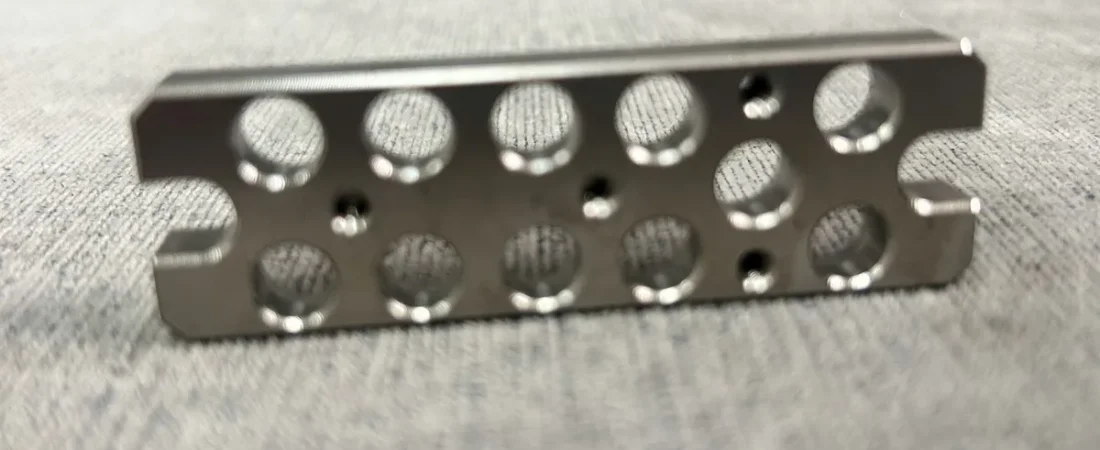
Solid metal blocks sit at the core of a lot of equipment: manifold and port blocks, sensor and spacer blocks, clamp blocks, locating blocks in fixtures and automation cells. Because they are machined from solid stock, the drawing decides almost everything about cost, lead time and how well the part fits. This guide covers what OEM buyers and engineers should decide before sourcing custom CNC machined aluminum and stainless steel blocks from China, and what to send with the RFQ so the first parts are right.
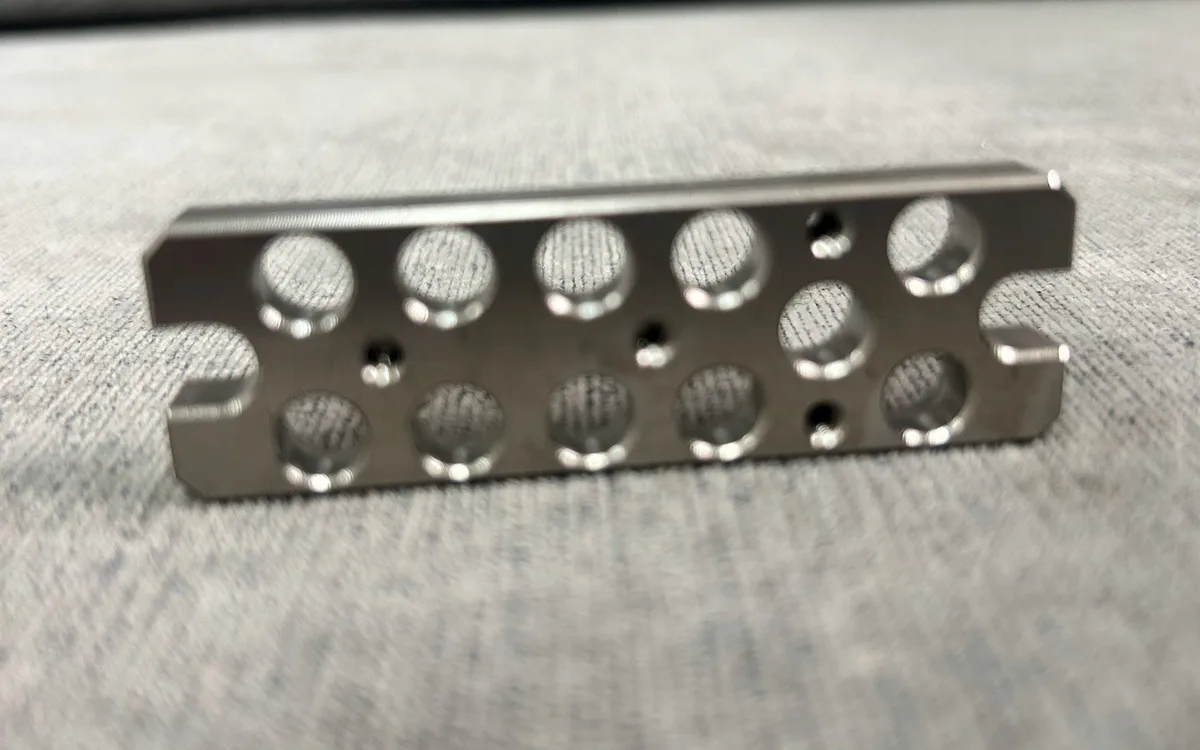
Why machine blocks from solid stock
- Accuracy where it counts. Faces, bores and hole patterns are cut in controlled setups, so locating features can hold far tighter tolerances than a cast or welded part without secondary work.
- One-piece rigidity. A block cut from bar or plate has no welds or joints to distort, crack or loosen, which suits load-bearing and locating parts.
- Many features in few setups. Pockets, steps, counterbores, tapped holes and cross-drilled ports can be machined on several faces of the same part.
- No tooling cost. Unlike casting or extrusion dies, CNC machining needs no part-specific tooling, which fits prototypes, NPI builds and small batches.
The trade-off is material removal. A block that is mostly pockets wastes stock and machine time, so for high volumes or simple profiles it is worth asking whether an extrusion or near-net blank would be cheaper.
Aluminum or stainless steel?
| Factor | Aluminum blocks | Stainless steel blocks |
|---|---|---|
| Weight | About one third the density of steel | Heavy; matters on moving axes |
| Machining time and cost | Fast to machine; usually the lower-cost option | Slower cutting, more tool wear; higher machining cost |
| Corrosion | Good, usually improved with anodizing or chem film | Good to excellent without coating, depending on grade |
| Wear and hardness | Soft; threads and contact faces can wear | Harder and more wear resistant |
| Heat | Conducts heat well; useful for cooling and heater blocks | Low thermal conductivity; holds strength at higher temperature |
| Typical uses | Automation, fixtures, sensor mounts, cooling and manifold blocks | Food, medical, fluid and wash-down equipment; parts that must stay uncoated |
Common grades
- 6061-T6 aluminum: the general-purpose choice for blocks, with good machinability, weldability and anodizing response.
- 7075-T6 aluminum: much stronger, for highly loaded blocks, but less corrosion resistant and not suited to welding.
- Cast aluminum tooling plate (such as MIC-6): stress relieved and stable, useful for wide, thin blocks and fixture bases that must stay flat.
- 303 stainless: the easiest stainless to machine, thanks to added sulfur, but less corrosion resistant than 304 and not recommended for welding.
- 304 / 304L stainless: the everyday corrosion-resistant grade.
- 316 / 316L stainless: molybdenum improves resistance to chlorides; used in marine, chemical and medical equipment.
- 17-4 PH stainless: can be heat treated to high strength for wear and load-bearing blocks.
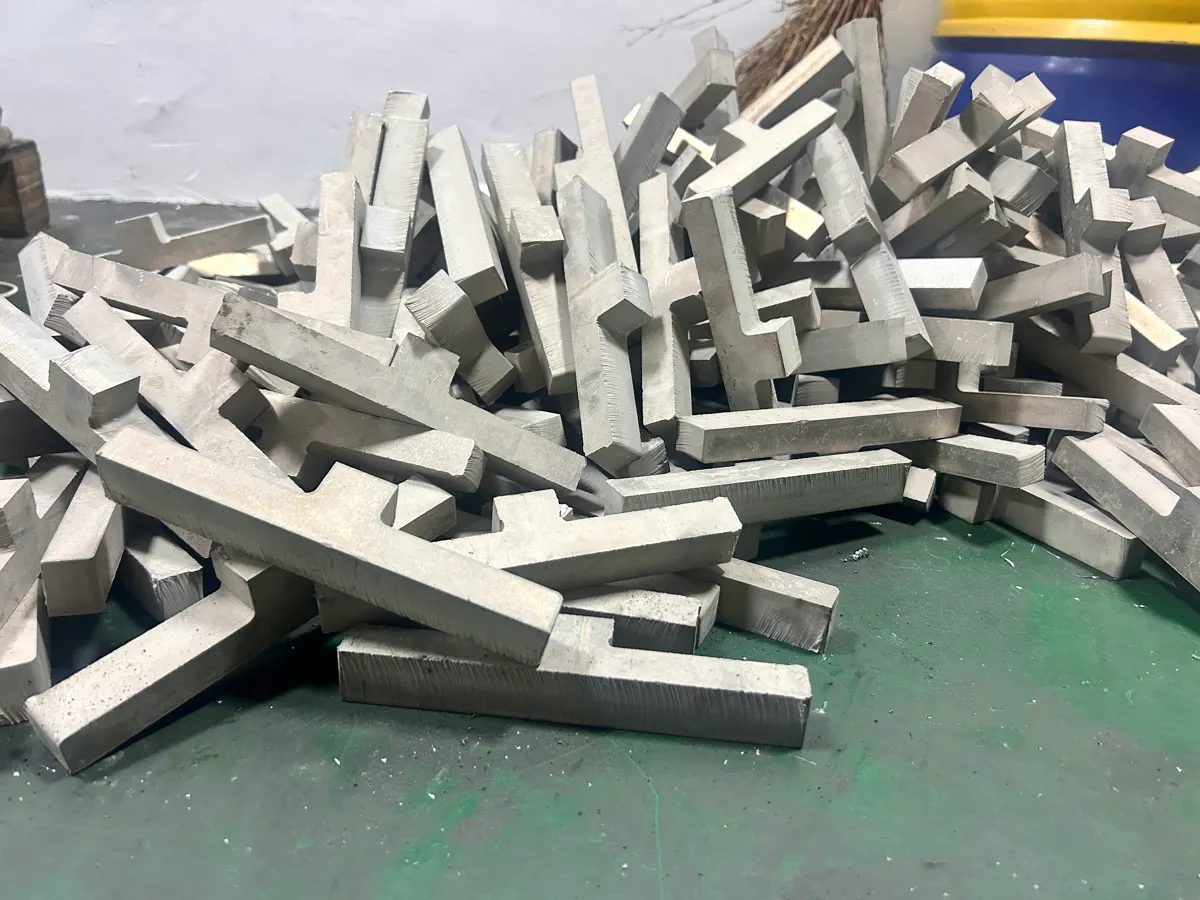
Write the full grade and temper on the drawing, for example “AL 6061-T6” or “SS 316L”, not just “aluminum” or “stainless”. If an equivalent grade is acceptable, say which standard it may follow (ASTM, EN, GB or JIS).
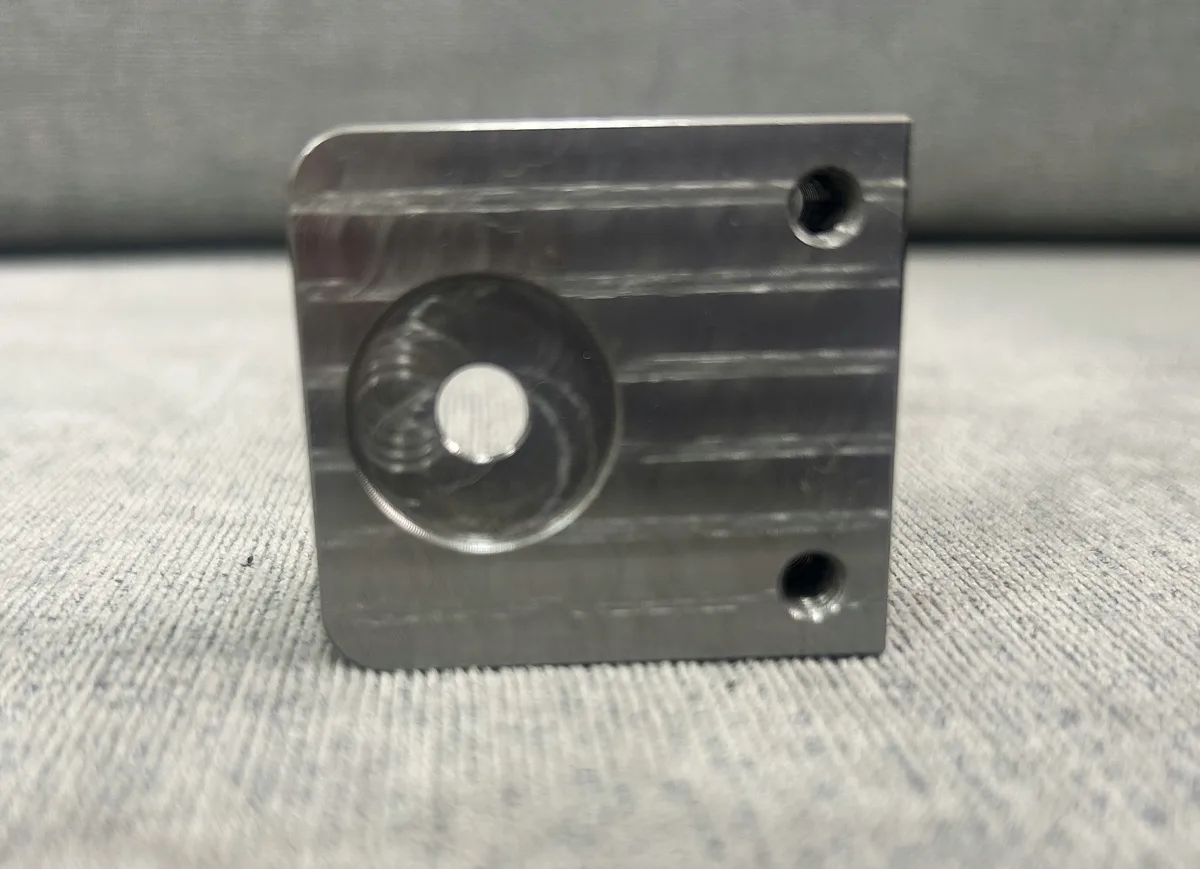
Tolerances: tight only where the block locates something
A block rarely needs tight tolerances everywhere. Most outside dimensions can follow a general tolerance such as ISO 2768-m. Put individual tolerances only on the features that locate or seal:
- Dowel pin holes and bearing bores, with a fit such as H7.
- Hole patterns that must line up with a mating part, ideally as a position tolerance from clear datums.
- Mounting faces, with flatness and, where needed, parallelism or perpendicularity to the datum face.
- Heights that stack up in an assembly, and sealing faces and O-ring grooves.
Every tightened tolerance adds machining and inspection time. If you are unsure which class fits, our guide to ISO 2768 general tolerances explains f, m and c and when to tolerance a feature separately.
Design details that drive block cost
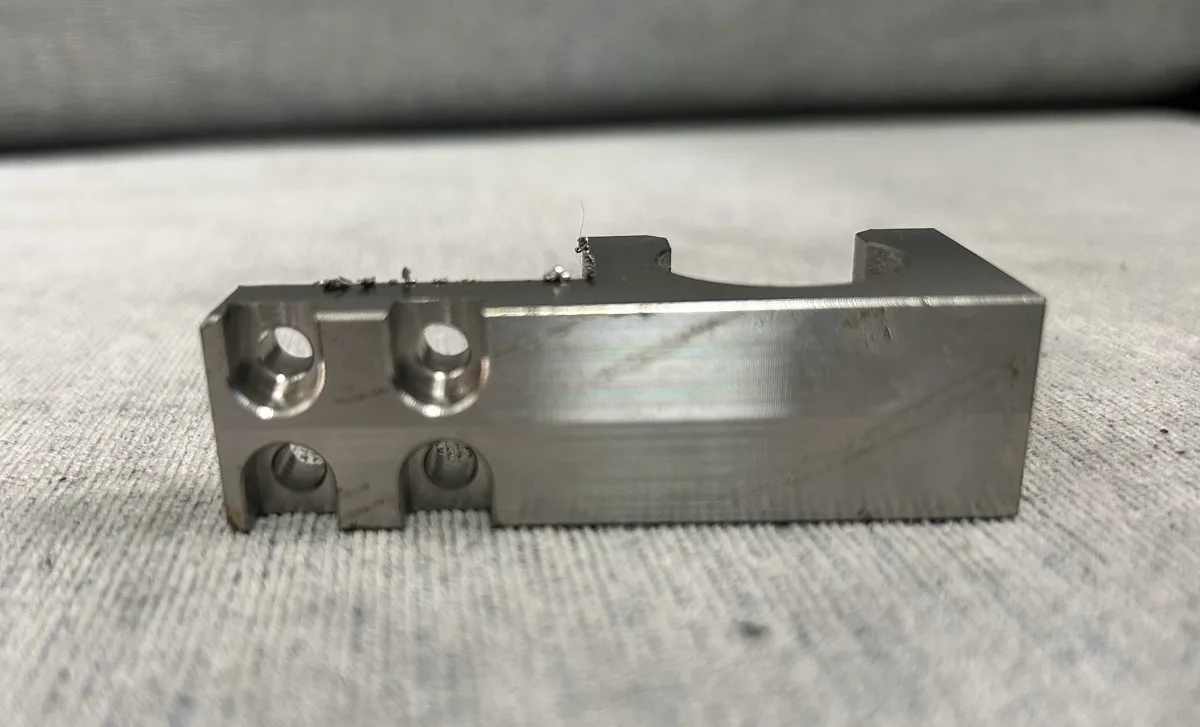
- Number of faces with features. Each face that needs machining usually means another setup. Keep features on as few faces as the design allows.
- Internal corners. Milled pockets always have a corner radius. Allow a radius slightly larger than the tool, and avoid deep pockets with small radii.
- Deep holes and cross ports. Long drilled channels and intersecting ports in manifold or cooling blocks need extra care for straightness and burrs where holes meet. Show which ports intersect and how they are plugged.
- Tapped holes. Ask for the thread depth you actually need rather than the full hole depth. In stainless, threads can gall with stainless screws; consider anti-seize or a different fastener material. In aluminum blocks that are assembled often, thread inserts protect the threads.
- Thin walls next to pockets. They chatter and spring back. Give them enough thickness or a looser tolerance.
- Flatness on large, heavily pocketed blocks. Removing a lot of material releases stress, and the block can move. Stable stock, a rough-then-finish sequence and realistic flatness callouts keep it under control.
Our DFM checklist for mounting plates and brackets covers the same principles in more detail; most of them apply directly to blocks.
Surface finishes for aluminum and stainless blocks
| Finish | Material | What to know |
|---|---|---|
| As machined | Both | Lowest cost; tool marks visible. State a roughness value (Ra) only where it matters. |
| Bead blasting | Both | Even matte look that hides tool marks. Mask sealing faces and precision bores. |
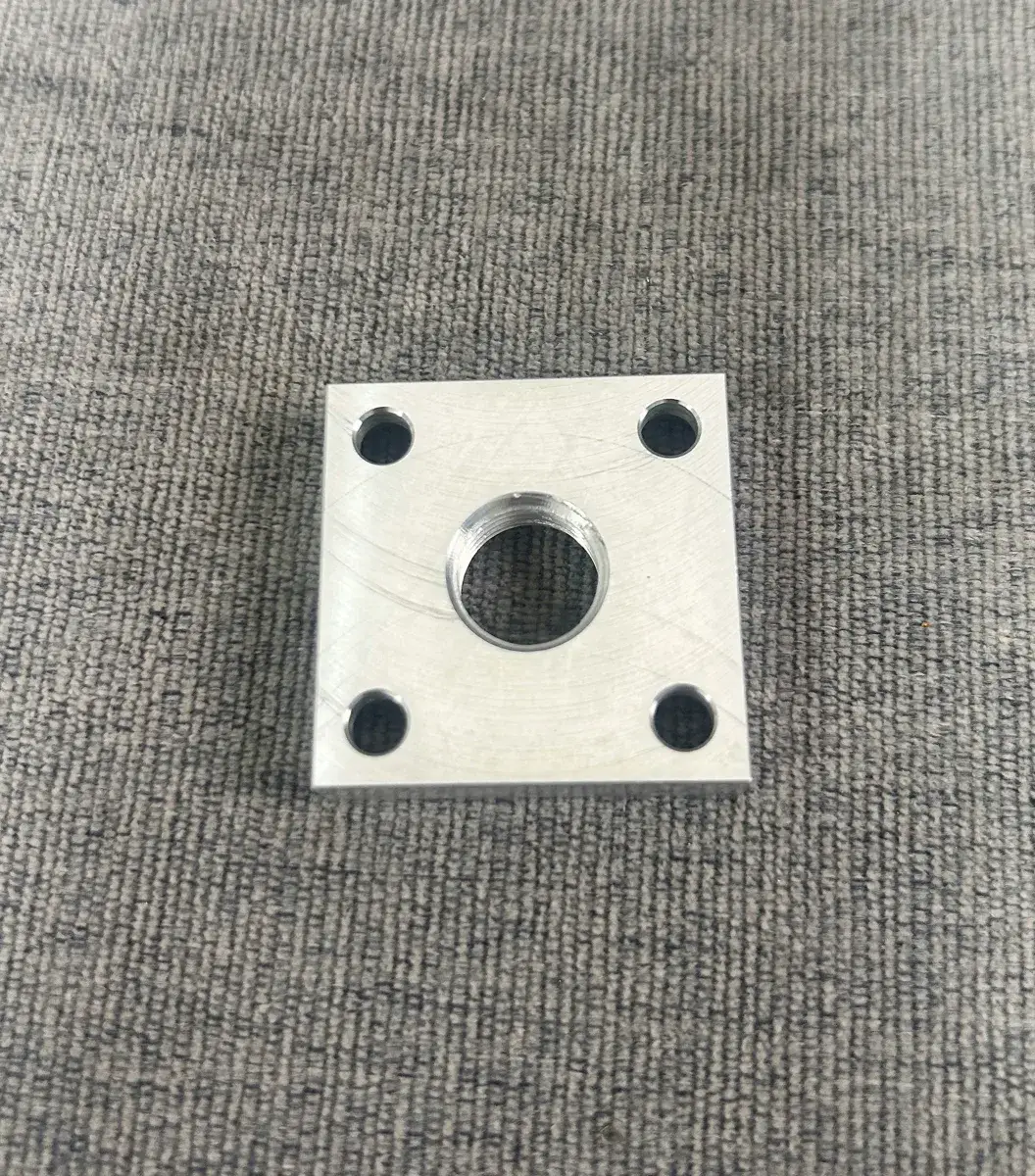
| Anodizing (Type II or hard Type III) | Aluminum | Corrosion and wear protection, with color options. It adds thickness, so mask or allow for fits and threads. |
| Chemical conversion (chem film) | Aluminum | Thin, conductive coating; useful for grounding and as a paint base. |
| Passivation | Stainless | Removes free iron and restores corrosion resistance after machining. Specify a standard such as ASTM A967 or AMS 2700. |
| Electropolishing | Stainless | Smooth, bright, easy-to-clean surface for food and medical parts. Removes a little material. |
For aluminum blocks with fits or threads, read how anodizing changes dimensions before choosing a coating thickness.
Sourcing machined blocks from China: what to send with your RFQ
Most delays in overseas sourcing come from missing information, not from machining. A complete request lets the supplier quote once and machine the first batch right.
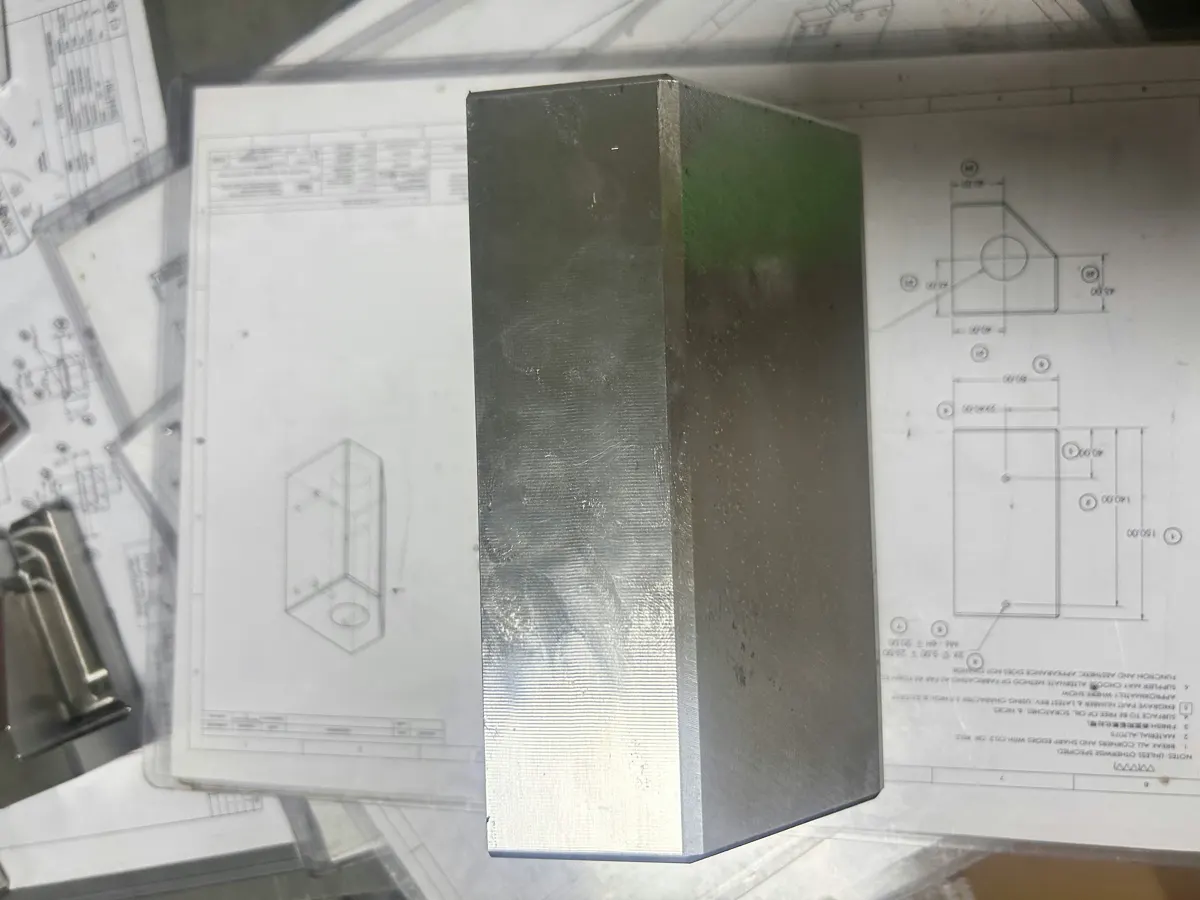
- A 3D model and a 2D drawing. STEP for geometry, PDF for tolerances, threads, finish and notes. If they disagree, say which one rules.
- Material grade and temper, and whether a mill certificate is required.
- Quantity for the first order and the expected repeat volume.
- Critical features marked on the drawing, and the general tolerance for everything else.
- Finish with its specification, color and masking areas.
- Inspection needs: first-article report, measured critical dimensions, or photos before shipment.
- Packing and delivery: protection for finished faces, delivery address and preferred shipping terms.
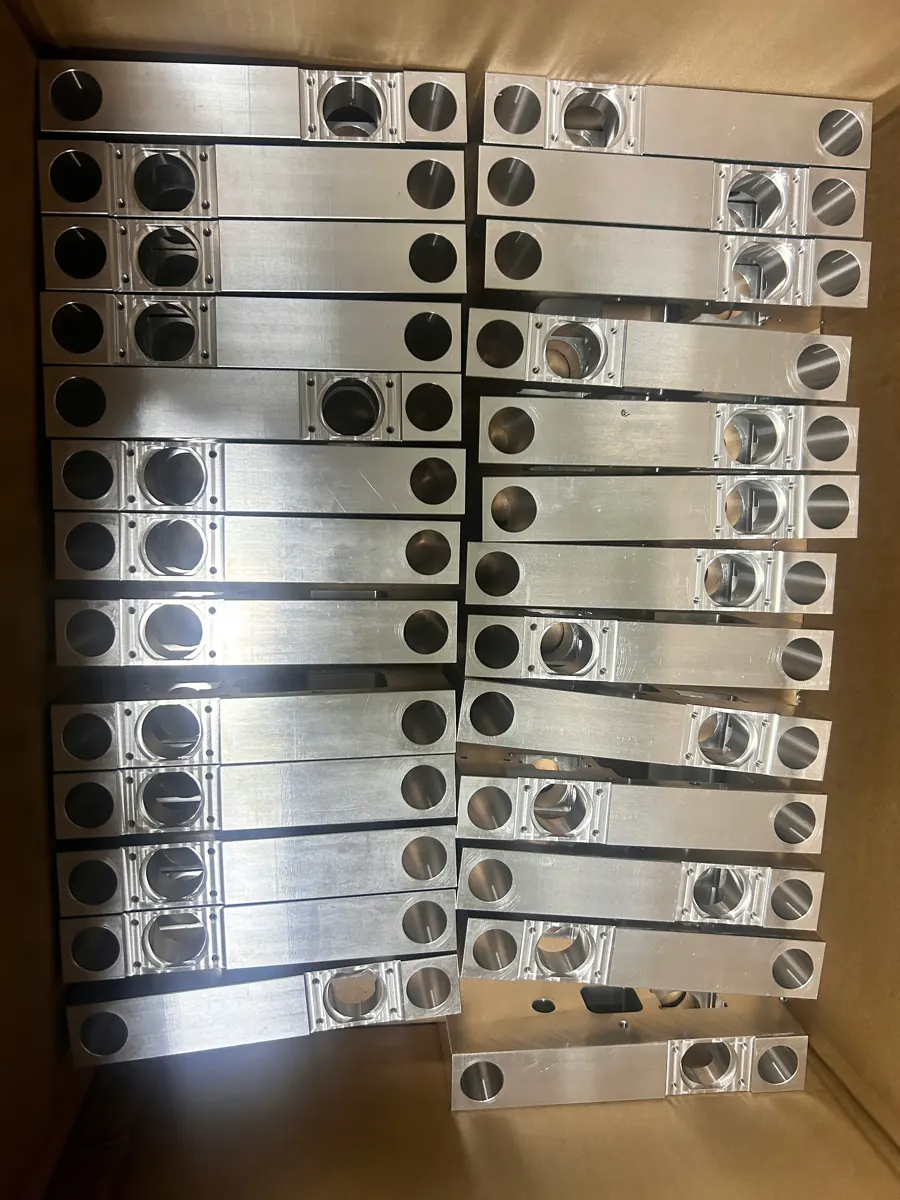
When you compare suppliers, ask how they will hold the critical features, what they will measure and with which tools, and how they handle questions on the drawing. A supplier that asks good questions before quoting usually saves you a remake later.
How VANTECH CNC machines custom blocks
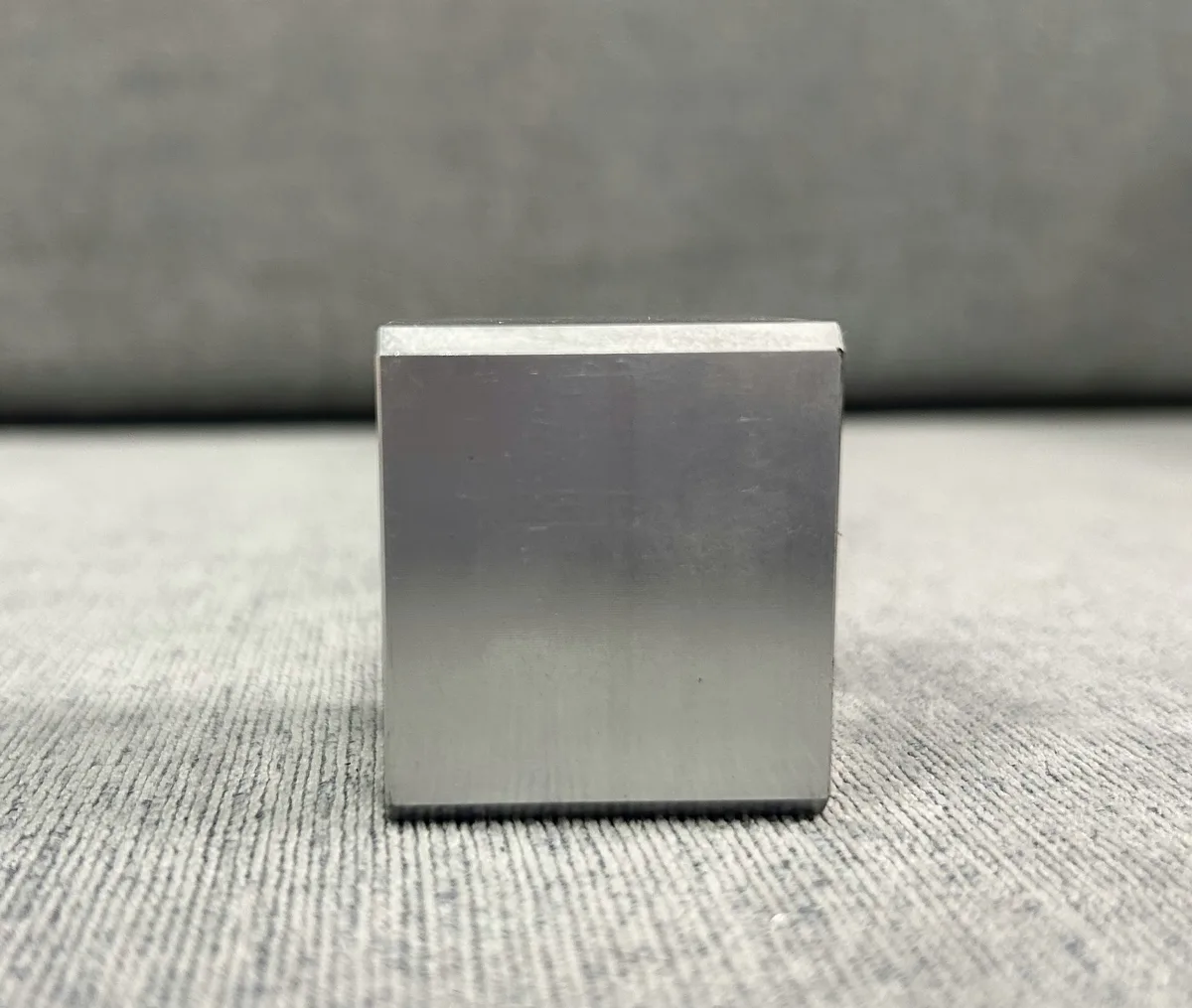
VANTECH CNC is a drawing-based CNC machining workshop in Suzhou, China, founded in 2012, with about 1,000 m² of workshop space and 10 CNC machines. We machine aluminum, stainless steel, carbon steel, brass and copper blocks for equipment, automation and fixture applications, from prototypes and NPI builds to repeat small batches.
- We review every drawing before quoting and flag features that add cost or risk.
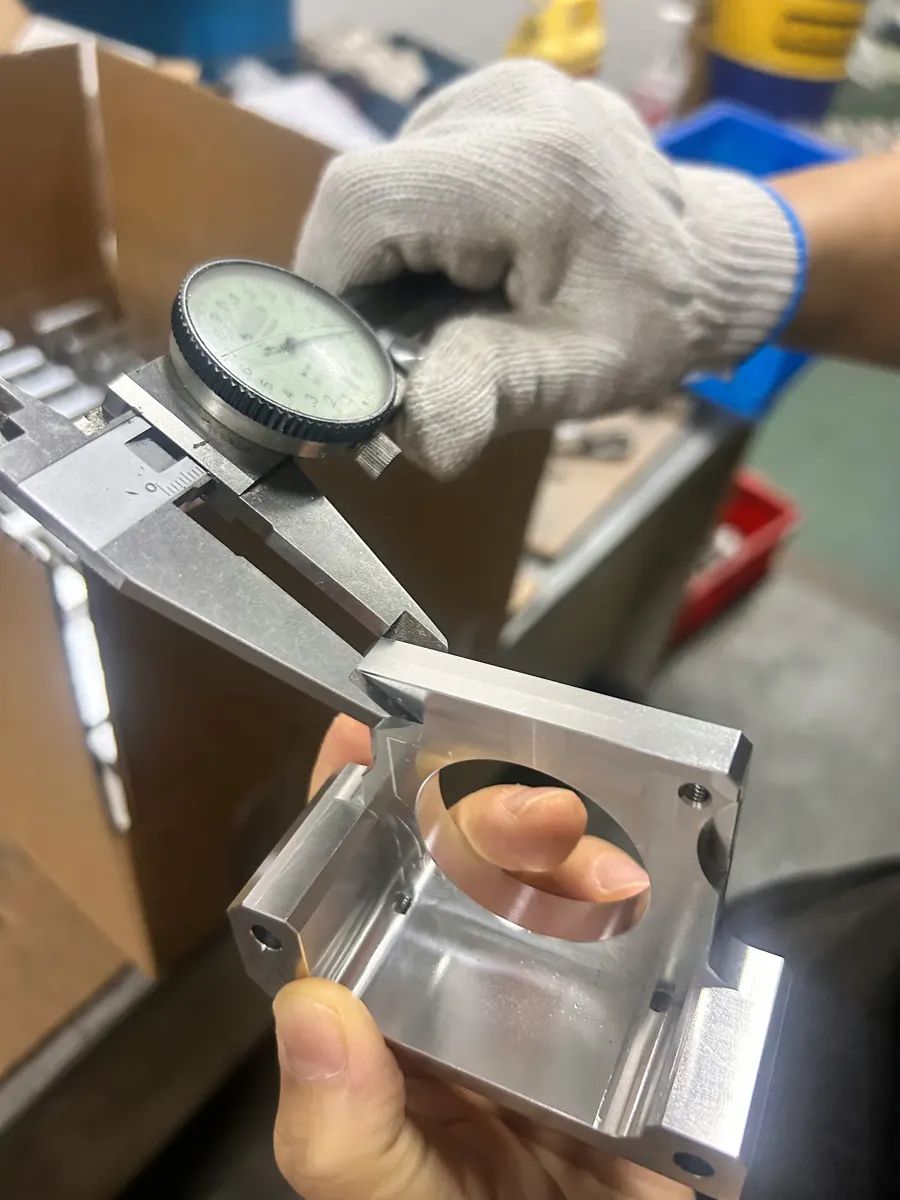
- Critical features are checked during machining and again before packing, with calipers, micrometers, dial indicators, height gauges and thread gauges as the part requires.
- Inspection photos or reports are available on request.
See examples such as our manifold block with a bored port, drilled machined block and spacer block with mounting holes, or our full CNC machining capabilities.
FAQ
Is a stainless steel block always better than aluminum?
No. Stainless is heavier and costs more to machine. Choose it for corrosion, hygiene, wear or temperature reasons; otherwise anodized aluminum is usually the better value.
What tolerance should I put on a machined block?
Use a general tolerance such as ISO 2768-m for most dimensions, and individual tolerances only on locating holes, bores, mounting faces and stacked heights.
Can you machine a single prototype block?
Yes. CNC machining needs no part-specific tooling, so one-off prototypes and small batches are practical. Unit prices drop as quantity rises because setup time is shared.
What files do you need for a quote?
A STEP file and a PDF drawing, plus material, quantity, finish and any inspection requirements.
Have a block drawing ready? Send it to VANTECH CNC with the material, quantity and finish, and we will review it and come back with practical feedback and a quote.